The Other Tradition
The story you weren't taught. The friendships that changed America. The proof that we can be better — because we already have been.
What if everything you learned about race in America was only half the story?
We all know the painful history — slavery, Jim Crow, segregation, the long struggle against racism that continues today. These truths matter profoundly and must never be forgotten.
But running alongside that history is another story, one rarely told: Americans of every background choosing friendship over fear, solidarity over separation, justice over comfort. We call this "The Other Tradition."
A Hidden History of Friendship
From the nation's founding to today, remarkable friendships have crossed the lines that divided us. These aren't exceptions — they're a tradition.
The Underground Railroad
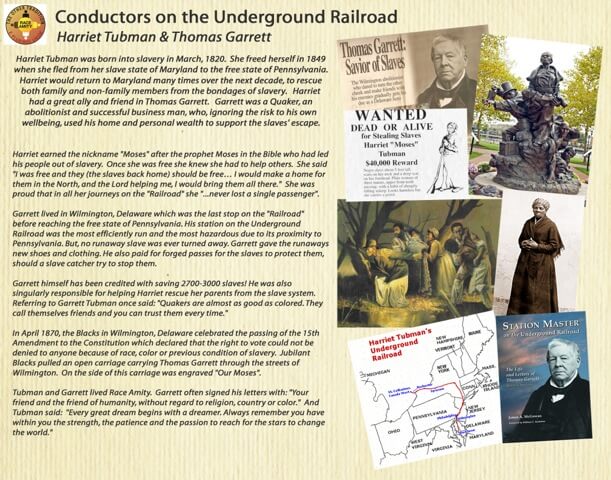
Harriet Tubman & Thomas Garrett
A fearless conductor who escaped slavery and a Quaker stationmaster who risked everything for strangers. Together, they helped over 2,500 people reach freedom. When Garrett was sued and lost his fortune, he told the judge: "If anyone knows of a fugitive who wants a shelter, send him to Thomas Garrett."
The Underground Railroad wasn't run by one group — it was a vast network of Black freedom seekers, Quaker activists, and allies of every background working together at great personal risk. Their cooperation proved that solidarity could triumph over an unjust system.
The Abolitionist Alliance
Frederick Douglass & Daniel O'Connell
An escaped slave turned orator and the Irish "Liberator" found common cause: the fight for human dignity. O'Connell declared that no one who supported slavery could claim to be a friend of Ireland. Their transatlantic friendship showed that freedom movements strengthen when they stand together.
Building for the Future
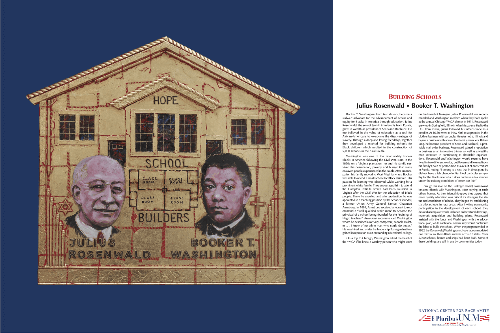
Julius Rosenwald & Booker T. Washington
A Jewish businessman whose parents fled oppression in Germany and a Black educator born into slavery shared a vision: education for every child. Together, they built over 5,000 schools across the rural South, educating a generation when America refused to. Rosenwald gave his fortune; Washington gave the blueprint.
The "Rosenwald Schools" educated nearly one-third of Black children in the South during the Jim Crow era. Maya Angelou, John Lewis, and countless others learned to read in buildings born from this partnership.
Friendship in the White House
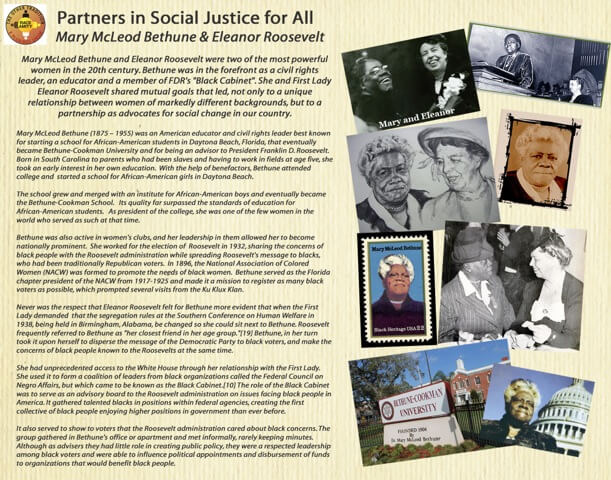
Mary McLeod Bethune & Eleanor Roosevelt
A daughter of formerly enslaved parents who became an educator and activist, and the First Lady of the United States, formed a bond that reshaped American politics. Their friendship wasn't just personal — it opened doors, changed policies, and proved that women across racial lines could lead together.
The Civil Rights Movement
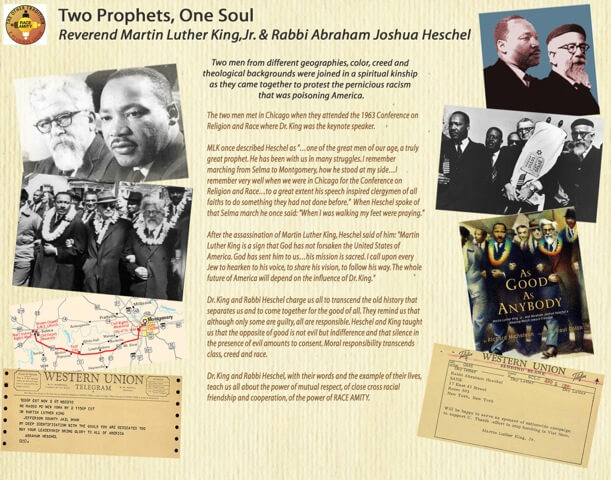
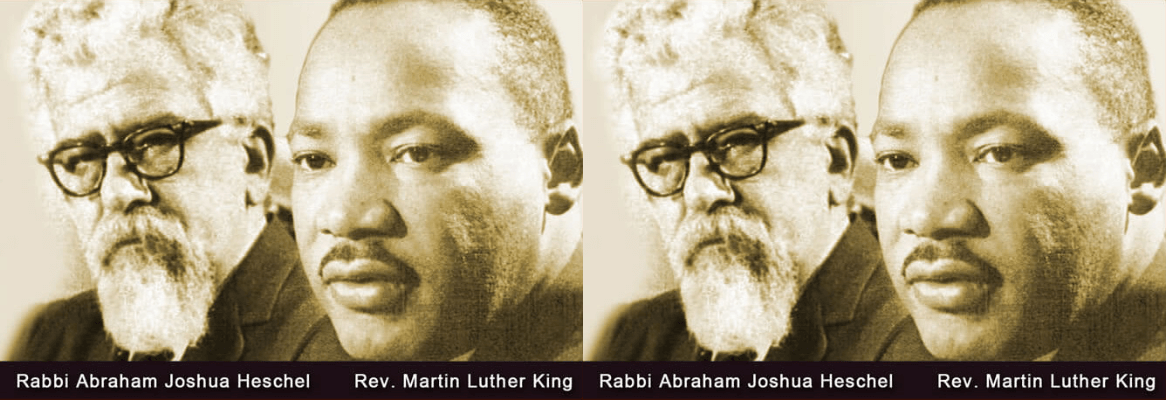
Martin Luther King Jr. & Rabbi Abraham Joshua Heschel
A Baptist minister from Atlanta and a Polish-born rabbi who fled the Nazis marched arm-in-arm from Selma to Montgomery. Heschel later said he felt like his "legs were praying." Their friendship united two communities with shared histories of oppression — and shared dreams of justice.
The Civil Rights Movement was never just a Black movement. Freedom Riders, white and Black together, faced fire and fury. Jewish lawyers helped form the NAACP. People of every background chose solidarity over silence.
The Bahá'í Community
A Century of Integration
Since the early 1900s, the Bahá'í community has championed racial unity not as aspiration but as daily practice. At a time when sharing a meal across racial lines was illegal in many places, Bahá'ís gathered for interracial worship, education, and fellowship — living the future they believed in.
Why This Story Matters Now
It Gives Us Hope
When the news shows only conflict, it's easy to believe we're more divided than ever. But knowing that Americans have successfully bridged racial divides before gives us confidence that we can do so again.
It Provides Models
How do you build friendship across difference? These stories aren't abstract — they're blueprints. Real people, making real choices, creating real change.
It Honors Forgotten Heroes
Many who worked for racial harmony have been overlooked by history. The Quaker who lost everything. The rabbi who marched. The businessman who built schools. Their stories deserve to be told.
It Builds Bridges
Shared history of cooperation creates common ground. When we see that our ancestors worked together, we're inspired to continue what they started.
See the Story
Our award-winning documentary series "An American Story: Race Amity and The Other Tradition" brings these friendships to life. Shown at film festivals nationwide and broadcast on public television, these films tell the stories that textbooks forgot.
They're stories of ordinary people who chose friendship over fear, cooperation over conflict, and amity over animosity. They changed America. And they invite us to do the same.
Watch the Documentary
"The earth is but one country, and mankind its citizens."
— Bahá'u'lláh
This isn't wishful thinking — it's a description of reality that our best moments have always recognized. The Other Tradition is the proof. The question is: will you become part of it?
Continue the Tradition
These stories aren't just history — they're a roadmap. The tradition doesn't end with them. It continues with you.